
Nestled between Toronto and Hamilton along the scenic shores of Lake Ontario, Halton Region stands as one of Canada’s most dynamic communities, where thriving urban centers blend seamlessly with protected agricultural lands and natural heritage. Home to over 600,000 residents across four distinct municipalities—Burlington, Oakville, Milton, and Halton Hills—this two-tier government structure delivers essential services while preserving the unique character of each community.
Understanding how Halton Region operates empowers you to access critical services, engage with local decision-makers, and shape the future of your neighborhood. The regional government oversees vital infrastructure including water treatment, waste management, public health, and an extensive road network, while your local municipality handles planning, building permits, and community-specific programs. This coordinated approach ensures efficient service delivery while maintaining strong local identity.
Whether you’re a longtime resident seeking to participate in public consultations, a newcomer navigating regional programs, a business owner exploring development opportunities, or a visitor discovering what makes Halton special, grasping the governance framework connects you to the services and representatives that matter most. Regional Council, composed of your local mayors and elected regional councillors, makes decisions affecting everything from transit expansion to environmental protection, with sustainability woven throughout policies and practices.
From award-winning conservation areas to innovative economic development initiatives, Halton Region’s commitment to balanced growth preserves agricultural heritage while fostering vibrant, inclusive communities where residents actively shape their shared future.
Understanding the Two-Tier System: Regional vs. Local Government
Halton Region operates under Ontario’s two-tier municipal system, a structure that divides governance responsibilities between regional and local levels. This framework is designed to balance efficiency with community representation, ensuring residents receive both broad regional services and localized municipal support.
At the regional level, Halton Region governs four distinct municipalities: Burlington, Oakville, Milton, and Halton Hills. The Regional government handles services that benefit from economies of scale and coordinated planning across these communities. These responsibilities include water treatment and distribution, wastewater management, waste collection and recycling programs, regional road maintenance, public health services, and long-term planning that considers both urban growth and the preservation of agricultural lands. The Region also oversees social services, affordable housing initiatives, and public transit through Burlington Transit, Oakville Transit, and Milton Transit.
Local municipalities, meanwhile, focus on neighbourhood-level services that directly impact daily life. Your city or town council manages local roads and sidewalks, fire and emergency services, community recreation programs, libraries, local planning and building permits, and bylaw enforcement. They also address specific community needs, whether that means maintaining the urban character of Burlington and Oakville or supporting the rural heritage and agricultural communities in Milton and Halton Hills.
This is why residents elect both regional and local councillors. Your local municipal council represents your immediate community interests, while regional councillors address broader issues affecting all of Halton. Many local mayors and councillors also serve on Regional Council, creating a connection between both levels of government. Understanding this division helps residents know which level of government to contact for specific services or concerns, making civic engagement more effective and ensuring that both community-specific needs and region-wide priorities receive appropriate attention.
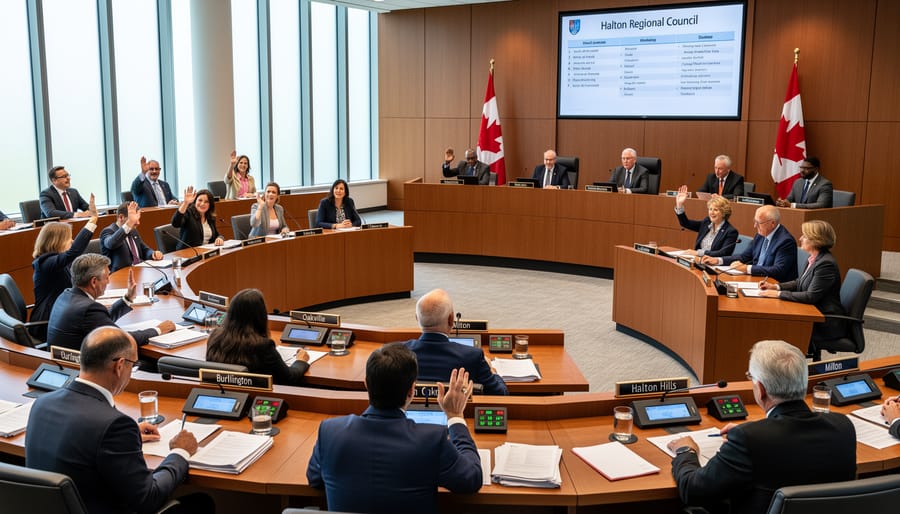
Who Makes the Decisions: Regional Council Composition
The Regional Chair’s Role
The Regional Chair serves as Halton Region’s chief executive officer and head of Regional Council, providing strategic leadership that shapes the community’s direction. Elected at-large by all Halton residents, the Chair represents the entire region rather than a single municipality, ensuring a balanced perspective that considers both urban centers and rural areas in decision-making.
The Chair’s responsibilities include presiding over Regional Council meetings, guiding policy discussions, and serving as the primary spokesperson for Halton on provincial and federal matters. This role involves building consensus among council members from Burlington, Oakville, Milton, and Halton Hills while maintaining focus on regional priorities like sustainable growth, infrastructure development, and environmental stewardship.
Beyond administrative duties, the Regional Chair acts as a community ambassador, fostering partnerships with local businesses, stakeholder groups, and residents. The position requires balancing urban development needs with the preservation of Halton’s agricultural heritage and natural spaces. Through regular engagement with constituents and transparent communication, the Chair ensures that governance remains accessible and responsive to the diverse needs of Halton’s growing population, from established farming communities to emerging business sectors.
Your Regional Councillors
Regional councillors serve as the vital connection between Halton’s diverse communities and regional decision-making. These representatives are elected by residents in Burlington, Halton Hills, Milton, and Oakville to advocate for local priorities while considering region-wide needs. Each municipality elects regional councillors based on its population, ensuring fair representation across urban centres and rural areas alike.
Your regional councillors participate in Regional Council meetings, vote on policies affecting services like water treatment and waste management, and help shape long-term planning initiatives that balance growth with environmental stewardship. They bring forward community concerns, support sustainable development projects, and work collaboratively to maintain Halton’s exceptional quality of life.
Connecting with your regional councillor is straightforward and encouraged. Contact information for all representatives is available on the Halton Region website, where you’ll find email addresses, phone numbers, and office locations. Many councillors also maintain active social media presence and hold regular community meetings. Whether you have questions about regional services, want to share feedback on proposed initiatives, or need assistance navigating regional programs, your councillors are accessible resources committed to serving residents, businesses, and stakeholders throughout Halton’s vibrant communities.
Services That Touch Your Daily Life
Water, Wastewater, and Environmental Stewardship
Halton Region takes pride in delivering clean, safe drinking water to residents while maintaining a strong commitment to environmental protection. The Region operates state-of-the-art water treatment facilities that serve Burlington, Oakville, Milton, and parts of Halton Hills, drawing primarily from Lake Ontario. Through rigorous testing and advanced purification processes, Halton ensures drinking water meets or exceeds provincial and federal standards, providing peace of mind to over half a million residents.
Wastewater management is equally sophisticated, with modern treatment plants processing millions of litres daily before safely returning treated water to the lake. These facilities incorporate innovative technologies that minimize environmental impact and support aquatic ecosystem health, reflecting the Region’s dedication to protecting natural resources for future generations.
Halton Region’s environmental stewardship extends beyond water services to comprehensive waste management programs. Residents benefit from accessible curbside collection for garbage, recycling, and organics, with high diversion rates that keep materials out of landfills. The Region’s Community Recycling Centres welcome household hazardous waste, electronics, and other items requiring special handling, making responsible disposal convenient for everyone.
The blend of urban and rural landscapes requires thoughtful environmental planning. Halton protects valuable farmland through its Rural Agricultural System while managing growth sustainably in urban areas. Green infrastructure initiatives, conservation efforts along the Niagara Escarpment, and watershed protection programs demonstrate how the Region balances development with environmental responsibility. These integrated approaches ensure both communities and natural areas thrive together, preserving the exceptional quality of life that defines Halton Region.
Public Health and Social Services
Halton Region provides comprehensive health and social services designed to support the wellbeing of all residents across its urban centers and rural communities. Halton Region Public Health delivers essential programs including immunization clinics, infectious disease prevention, food safety inspections, and health promotion initiatives that encourage active living and healthy eating habits throughout the community.
The Region offers valuable support services for families, seniors, and vulnerable populations. Ontario Works provides financial assistance and employment services to help residents achieve independence, while subsidized childcare programs make quality early learning accessible to working families. Dedicated programs for older adults include information and referral services, caregiver support, and assistance with navigating healthcare systems.
Community paramedic services extend beyond emergency response, offering home visits and preventive care that help seniors remain safely in their homes. Public health nurses conduct school-based health programs, provide maternal and child health support, and offer sexual health services at accessible clinic locations.
Halton’s commitment to sustainable community development includes mental health resources, substance use support, and housing stability programs. These integrated services reflect the Region’s understanding that healthy communities require both environmental stewardship and comprehensive social support systems that respond to diverse resident needs.
Roads, Transit, and Connectivity
Halton Region maintains an extensive transportation network that keeps the four municipalities well-connected and accessible. The Region manages over 850 kilometers of major roads, including key arterial routes that facilitate movement between Burlington, Oakville, Milton, and Halton Hills while connecting residents to the Greater Toronto Area and beyond.
Public transit services are delivered through Burlington Transit, Oakville Transit, and Milton Transit, each serving their respective communities with local bus routes. Regional coordination ensures these systems work together efficiently, with connections to GO Transit stations that provide critical links to Toronto and other regional centers. This integration supports both daily commuters and those traveling for business or leisure.
The Region prioritizes sustainable transportation solutions, including dedicated cycling infrastructure and multi-use pathways that blend seamlessly with the area’s urban and rural character. Recent investments focus on expanding transit services to accommodate growth while reducing environmental impact. Whether you’re commuting to work, exploring local attractions, or conducting business across municipalities, Halton’s transportation network is designed to move people safely and efficiently while supporting the community’s commitment to environmental stewardship and quality of life.
Supporting Economic Growth: From Farms to Business Parks
Halton Region’s economic vitality stems from a carefully balanced approach that honors its agricultural heritage while fostering innovation and business growth. The Regional government plays an active role in supporting economic development across all sectors, recognizing that prosperity depends on both preserving valuable farmland and creating opportunities for entrepreneurship.
Agriculture remains a cornerstone of Halton’s economy, with the Region implementing protective measures through its Rural Agricultural Strategy. This framework ensures that prime agricultural lands continue to support local food production while providing farmers with resources to adopt sustainable farming practices. Programs assist agricultural operations with modern technology adoption, water management improvements, and connections to local markets, helping farm families thrive in a changing economy.
For small businesses and entrepreneurs, the Region works alongside local municipalities to streamline permit processes and provide access to business development resources. Economic development staff connect business owners with programs designed to support startups, facilitate expansion, and encourage innovation. These services help create the diverse mix of retail, service, and knowledge-based businesses that contribute to vibrant downtown cores and employment opportunities for residents.
Larger enterprises benefit from Halton’s strategic location and business-friendly environment. The Region supports employment lands planning that designates appropriate areas for business parks and industrial development, ensuring these spaces have the infrastructure needed to attract investment. By concentrating commercial growth in designated areas, the Region protects natural features and agricultural zones while providing room for economic expansion.
The approach reflects a commitment to sustainable growth that respects both rural character and urban needs. Green business initiatives encourage companies to adopt environmentally responsible practices, while infrastructure investments in broadband connectivity and transportation networks support businesses across all sectors. This balanced strategy ensures Halton’s economy remains resilient and diverse, providing employment opportunities while maintaining the quality of life that makes the Region an attractive place to live and work.
Planning Your Future: Regional Vision and Community Input
Halton Region takes a thoughtful, forward-looking approach to planning through its Regional Official Plan, a comprehensive framework that guides growth and development across Burlington, Halton Hills, Milton, and Oakville. This plan addresses the unique challenge of balancing urban expansion with the preservation of valuable agricultural lands and natural heritage systems that define the region’s character.
The Regional Official Plan establishes where and how growth should occur, directing development to urban areas while protecting the region’s greenbelt and rural landscapes. This strategic approach ensures that as Halton grows to accommodate new residents and businesses, it maintains the blend of urban amenities and rural charm that makes the community special. The plan addresses transportation networks, employment lands, housing needs, and environmental protection, creating a coordinated vision for sustainable development.
Community input plays a vital role in shaping Halton’s future. The Region actively invites residents and business owners to participate in planning processes through various channels. Public consultation meetings provide opportunities to learn about proposed initiatives and share your perspectives directly with planners and decision-makers. These sessions often focus on specific projects, official plan amendments, or regional strategies that affect daily life.
You can stay informed and engaged by visiting the Region’s website, where upcoming consultations are posted along with background materials and reports. The planning department welcomes written submissions and feedback on development applications and policy updates. Many consultations now offer both in-person and virtual participation options, making it easier for everyone to contribute.
By participating in these processes, you help ensure that Halton’s growth reflects community values and priorities, creating a region that works for current residents while welcoming future generations. Your voice matters in building a sustainable, vibrant future for Halton Region.
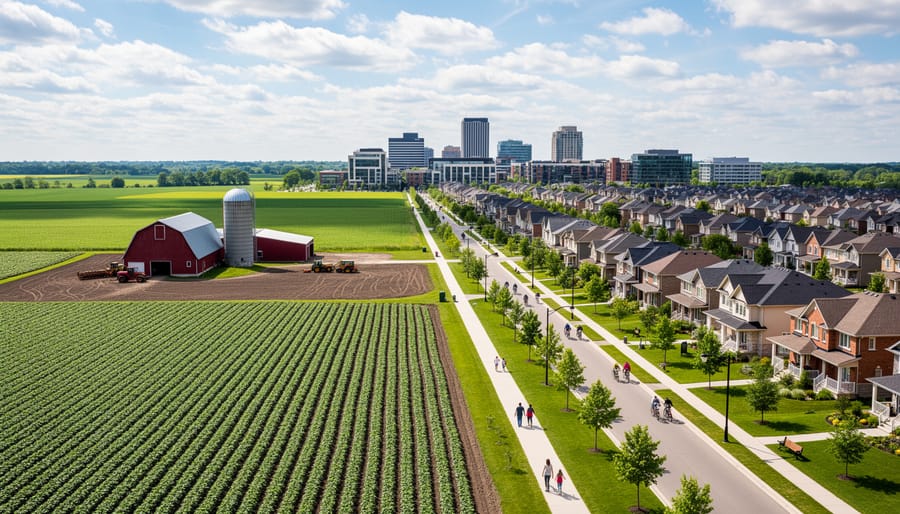
The Halton Regional Government structure is designed to serve the diverse needs of this dynamic community, balancing urban growth with rural heritage while maintaining a strong commitment to sustainability. Whether you’re a long-time resident, newcomer, business owner, or visitor, understanding how your regional government operates empowers you to access essential services and participate in shaping the future of this vibrant area.
Your regional government is here to serve you through numerous accessible channels. Residents can attend council meetings to voice concerns, access online portals for permits and service requests, or connect with regional representatives who advocate for your interests. The Region’s commitment to transparency means information about budgets, development plans, and environmental initiatives is readily available to all community members.
Getting involved is easier than you might think. Start by visiting the Halton Region’s official website to explore current initiatives, register for community consultations, or sign up for service notifications. Follow your local and regional councillors on social media to stay informed about decisions affecting your neighbourhood. Whether you need to access public health services, understand waste management programs, or explore economic development opportunities, your regional government stands ready to assist.
Together, we build a stronger, more connected Halton Region that honours both its agricultural roots and urban aspirations.